Junlei Chen

Recent Related Posts

Biden’s SAVE Plan – Distributional Impact Analysis

The impact of income-driven repayment (IDR) educational financing plans by income, race, and gender is not generally well understood. Our analysis estimates that approximately 43 percent of the subsidies from President Biden’s Saving on a Valuable Education (SAVE) plan will accrue to current Black student borrowers and 71 percent to current female borrowers. While lower- to middle-income student borrowers stand to gain the most, we estimate that about a fifth of the benefits will go to households in the top 20 percent of the income distribution, and borrowers with graduate-level education who benefit from the SAVE plan tend to experience the highest savings on average.

Biden’s SAVE Plan – Distributional Impact Analysis

Analysis of President Biden’s New Plans for Student Loan Debt Relief – April 2024

We estimate that President Biden’s recently announced “New Plans” to provide relief to student borrowers will cost $84 billion, in addition to the $475 billion that we previously estimated for President Biden’s SAVE plan. Moreover, some debt relief in the New Plans accrues to borrowers in households with income more than the SAVE plan coverage.

Analysis of President Biden’s New Plans for Student Loan Debt Relief – April 2024

Medicare Advantage Auto-Enrollment

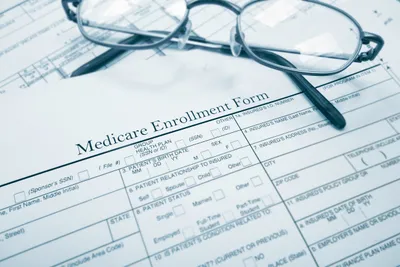
PWBM estimates that auto-enrolling into a Medicare Advantage (MA) plan those who age into Medicare and fail to sign up for Medicare Fee-For-Service (FFS) or another MA plan would increase enrollment in the MA program by 1.4 million people in 2032 and increase federal outlays by $189 billion over the 2022-32 period. If we assume that in response to such a policy change people would lose the incentive to enroll in Medicare FFS and instead get automatically enrolled into a MA plan, enrollment would increase by 6.8 million people in 2032 and outlays would increase by $269 billion over the 2022-32 period.

Medicare Advantage Auto-Enrollment